

What To Know
- Imagine stepping out of your spacecraft onto the lunar surface and settling into a home that looks like it came straight out of a Smurfs village.
- At the heart of this innovative design is fungal mycelium, the root-like structure of mushrooms known for its ability to colonize and thrive in underground environments.
- ” As the agency pushes forward with its Artemis program to return humans to the Moon, it’s clear that the lunar surface is just a stepping stone.
As space agencies race to establish a permanent human presence on the Moon, two unconventional solutions are pushing the boundaries of extraterrestrial architecture. NASA backs research into self-growing fungal dwellings, while ESA explores building blocks made from lunar dust. These innovative approaches could revolutionize off-world construction and pave the way for sustainable lunar colonization.
Fungal fantasies: NASA’s mushroom-powered moon homes
Imagine stepping out of your spacecraft onto the lunar surface and settling into a home that looks like it came straight out of a Smurfs village. This seemingly far-fetched concept is actually a serious contender in NASA’s quest for viable lunar habitats. The space agency is throwing its support behind the Mycotecture Off Planet project, an initiative that’s been brewing since 2018 at NASA’s Ames Research Center in California.
The core idea of this project is nothing short of revolutionary:
- Self-constructing habitats
- Self-repairing structures
- Natural radiation shielding for astronauts

At the heart of this innovative design is fungal mycelium, the root-like structure of mushrooms known for its ability to colonize and thrive in underground environments. This living material boasts impressive properties:
- Superior insulation capabilities
- Greater compression resistance than construction-grade wood
- More flexibility than concrete
Growing homes on alien soil: How it works
The concept behind these fungal habitats is elegantly simple yet profoundly adaptable to the lunar environment. Here’s how it could work:
- Initial setup: Early crewed missions would bring the mycelium starter cultures to the Moon.
- Resource utilization: The fungi would be fed with:
- Water ice, which has been detected on the Moon
- Organic waste from the astronauts and their activities
- Growth phase: Given the right conditions, the mycelium would expand and form the structure of the habitat.
- Maturation: The living material would eventually harden into a durable, protective shell.
This approach offers significant advantages for long-term lunar colonization:
- Reduced payload mass for construction materials
- Lower logistical costs for subsequent missions
- Utilization of in-situ resources
- Potential for expanding and modifying habitats as needed
From concept to cosmos: NASA’s next steps
The Mycotecture Off Planet project has made impressive strides since its inception:
- Successfully created biocomposites from fungal mycelium
- Developed and tested prototypes
- Conducted material tests in planetary simulators

These promising results have earned the project renewed support from NASA through its NIAC (NASA Innovative Advanced Concepts) program. The next ambitious goal? Preparing for an orbital demonstration in low Earth orbit.
NASA Administrator Bill Nelson emphasizes the importance of such groundbreaking research: “NASA will need new sciences and technologies we don’t yet know about.” As the agency pushes forward with its Artemis program to return humans to the Moon, it’s clear that the lunar surface is just a stepping stone. The ultimate destination is Mars, and it’s this long-term vision that drives NASA to fund even the most unconventional ideas.
Building blocks of the future: ESA’s lunar Legos
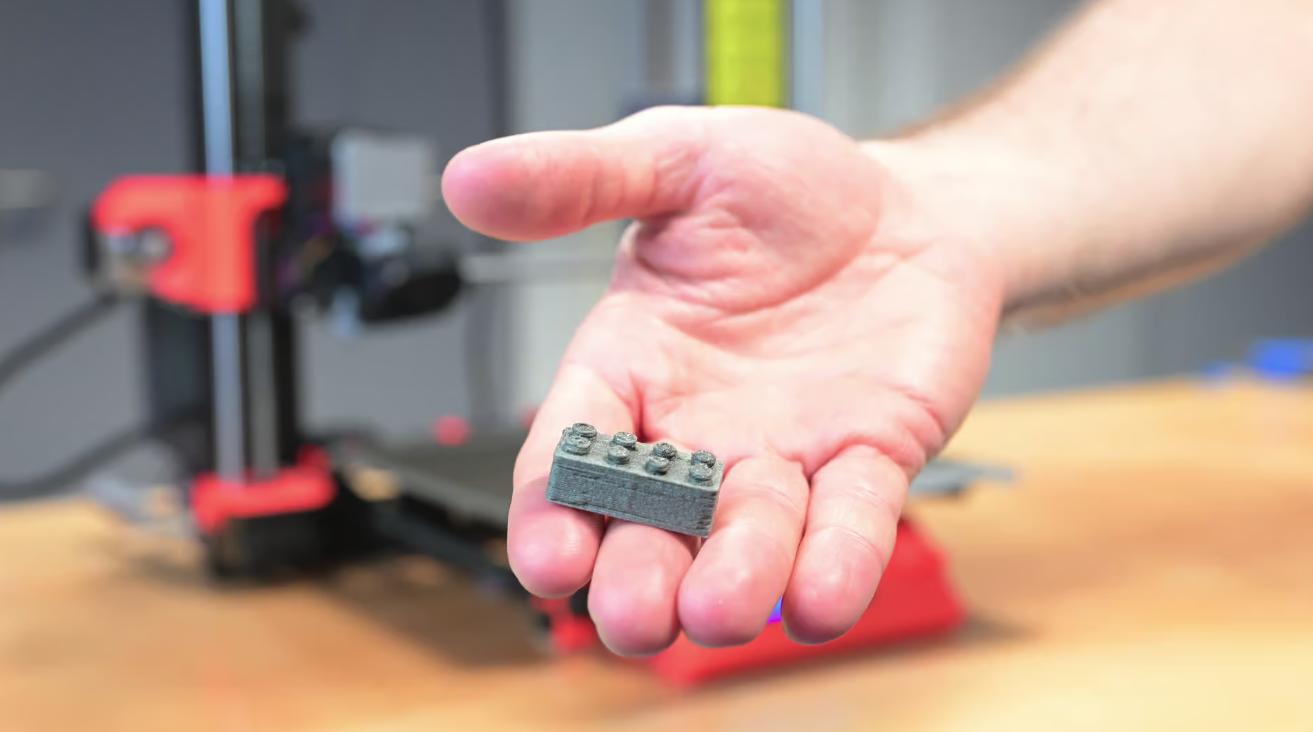
While NASA explores fungal architecture, the European Space Agency (ESA) is taking a more familiar approach – with an extraterrestrial twist. For years, ESA has been investigating the production of lunar bricks using materials found on the Moon’s surface.
ESA’s scientific officer, Aidan Cowley, explains the significance of this research: “No one has built a structure on the Moon, so it’s interesting to be able to test all types of designs and construction techniques with our space bricks.”
The agency has now taken this concept a step further by producing Lego-like bricks from simulated lunar dust. Here’s what you need to know about this innovative project:
- Material source: While not actual lunar regolith, the researchers used dust from a meteorite to simulate Moon dirt.
- Versatility: The Lego-inspired design allows for flexible and modular construction approaches.
- In-situ resource utilization: This technique could significantly reduce the need to transport building materials from Earth.
The global race for lunar construction
The United States and ESA aren’t alone in their pursuit of lunar building technologies. China has also thrown its hat into the ring, with ambitious plans to demonstrate on-site construction capabilities during its automated Chang’e 8 mission, slated for 2028.
This international competition is driving rapid advancements in several key areas:
- Material science: Developing new composites and techniques for working with lunar regolith
- Robotics: Creating autonomous systems capable of constructing habitats without human intervention
- 3D printing: Adapting additive manufacturing techniques for use in lunar environments
- Life support systems: Integrating habitat construction with technologies for maintaining a breathable atmosphere and managing waste
The future of lunar living: Challenges and opportunities
As these innovative habitat solutions progress from laboratory tests to potential real-world (or rather, real-Moon) applications, several challenges remain:
- Radiation protection: Ensuring that fungal or regolith-based structures can shield inhabitants from harmful cosmic rays
- Thermal management: Designing habitats that can withstand the extreme temperature fluctuations on the lunar surface
- Structural integrity: Testing the durability of these novel materials under low-gravity conditions and exposure to space weathering
- Scalability: Developing techniques to efficiently produce larger structures as lunar colonies expand
Despite these hurdles, the potential benefits of these unconventional approaches are immense:
- Drastically reduced launch costs for construction materials
- Sustainable, expandable habitats that can grow with the needs of a lunar colony
- Development of technologies applicable to future Mars missions and beyond
- Potential for creating Earth-based sustainable building materials inspired by space research
As we stand on the brink of a new era in space exploration, these seemingly fantastical ideas – mushroom houses and Moon Legos – may well become the foundation of humanity’s first permanent foothold beyond Earth. The journey from science fiction to lunar reality is shorter than we might think, and the next giant leap for mankind could very well be into a home grown from fungi or built with cosmic building blocks.


