

What To Know
- The key to the survival of lunar rovers, then, lies in technology that can switch between daytime cooling and nighttime insulation in an energy-efficient manner.
- In other words, when cooling is not required, EHPs create a small opposing force to stop the flow of refrigerant, while consuming a minimal amount of energy.
- By minimizing energy expenditure and maximizing cooling efficiency, this innovation could transform the way lunar missions are planned and executed, paving the way for a more sustainable and in-depth exploration of our natural satellite.
The Moon, with its extreme temperatures and lack of atmosphere, poses major challenges for the survival of machines. In an attempt to address these challenges, a team of engineers from Nagoya University in Japan, led by Dr. Masahito Nishikawara, has developed innovative technology to cool lunar rovers in an energy-efficient manner. This breakthrough could extend the life of the vehicles, enabling longer and deeper exploration missions.
The Challenges of Lunar Survival
The conditions on the Moon are extremely hostile to machines. Lunar days and nights each last fourteen Earth days, with temperatures varying from -173°C at night to 127°C during the day. Without an atmosphere to insulate and distribute heat, rovers sent there must therefore face intense thermal cycles. The freezing nights require heating systems to keep batteries and electronics at operating temperatures, while scorching days demand a active cooling to prevent overheating. Traditional solutions include electric heaters to warm components at night and active cooling systems to dissipate heat during the day. However, these methods consume a lot of energya precious resource on the Moon where rovers rely on batteries powered by solar panels. These batteries must last fourteen days without recharging, which limits the amount of energy available for heating and cooling. Passive cooling systems, such as Loop Heat Pipes (LHP)which essentially work like refrigerators, are efficient and do not require electricity, but they operate continuously. This means that they cool even when it would be better to keep warm. The key to the survival of lunar rovers, then, lies in technology that can switch between daytime cooling and nighttime insulation in an energy-efficient manner.
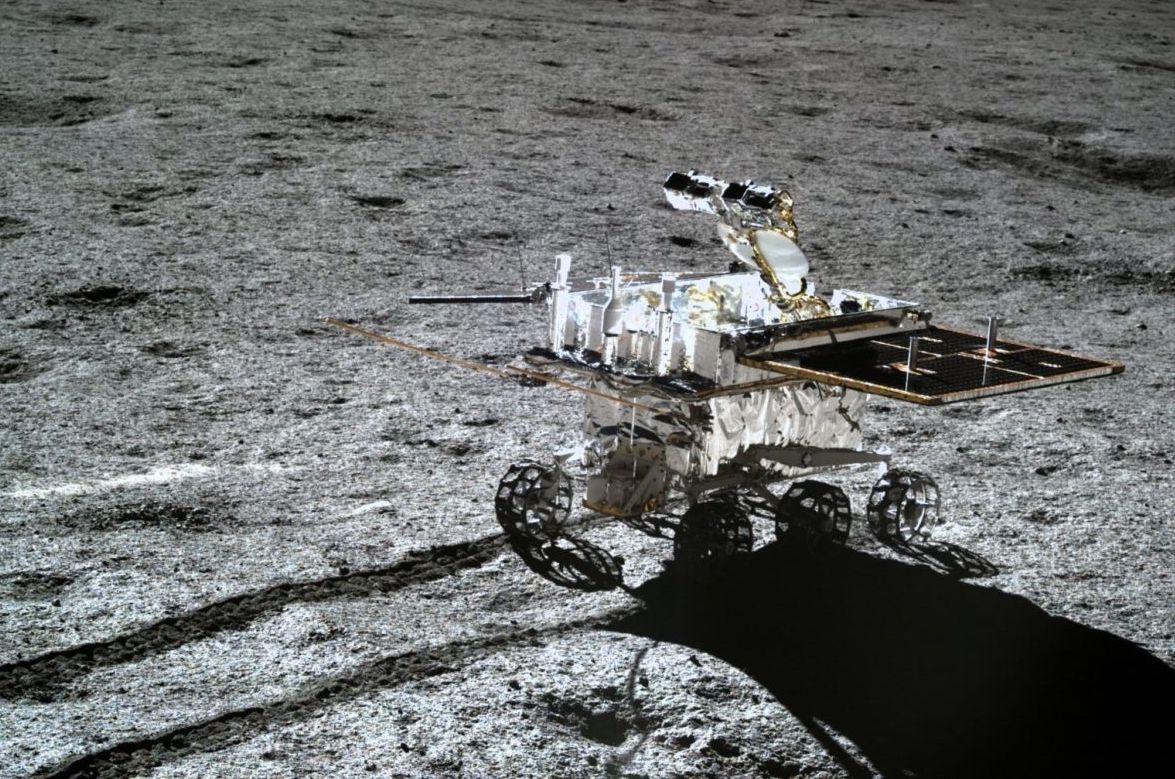 The Yutu 2 rover on the Moon. Credits: CNSA/CLEP
A technological innovation for lunar exploration
A recent innovation signed by researchers from Nagoya University combines the advantages of loop heat pipes (LHP) with those of Electrohydrodynamic pumps (EHP). These use electric currents to create a magnetic field, thus applying a force to the refrigerant. This allows control refrigerant flow without the efficiency losses associated with mechanical valves. In other words, when cooling is not required, EHPs create a small opposing force to stop the flow of refrigerant, while consuming a minimal amount of energy. This combination of LHP and EHP thus allows for a Precise and energy-efficient control of lunar rover cooling. During the day, the system efficiently dissipates the heat generated by the electronic components. At night, it insulates them to protect them from extreme cold, while consuming very little energy. This approach not only ensures the survival of the rovers in extreme temperatures, but also optimizes the use of limited energy resources. By minimizing energy expenditure and maximizing cooling efficiency, this innovation could transform the way lunar missions are planned and executed, paving the way for a more sustainable and in-depth exploration of our natural satellite.


